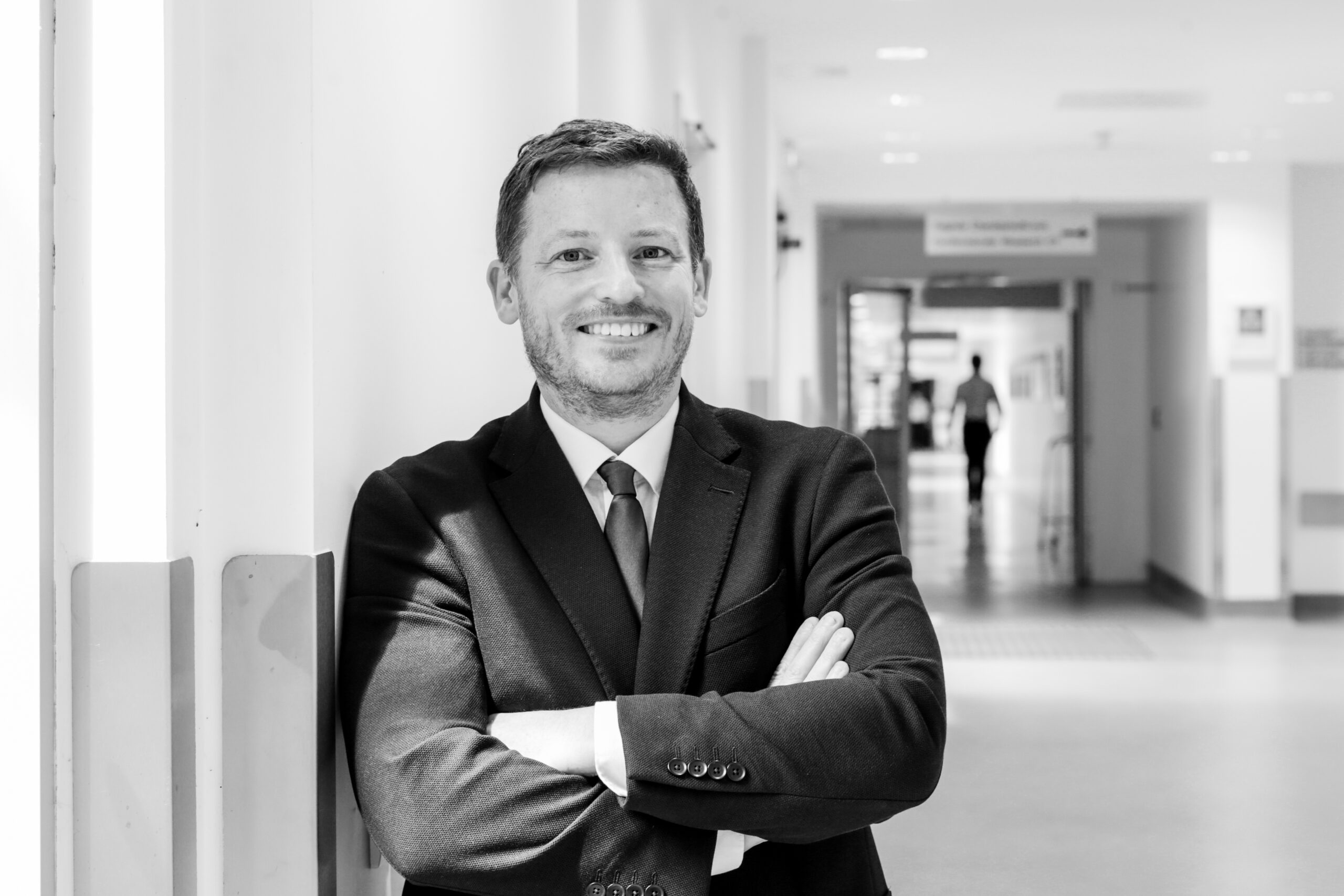
Rush Bartlett recently visited Ireland, as a guest contributor to the BioInnovate Strategic Innovation for Senior Executives training run in partnership with Irish Medtech Skillnet. Rush is a Stanford Biodesign alumnus, a five-time founder with more than 100 patents and 7000-plus innovators trained, and he is one of the leading figures in the global MedTech innovation community. He currently leads Sluice AI, a platform that helps organisations scale the Biodesign process. Rush brings an insider’s view of how leading global MedTech companies are using needs-driven innovation to deliver meaningful health impact.
When Professor Martin O’Halloran and Rush Bartlett sit down together, there’s a quiet understanding that what connects them isn’t geography or even profession – it’s process.
Both are advocates of the world-renowned Stanford Biodesign model, and both have carried that methodology far beyond its origins. For Martin O’Halloran, it took root in Galway, where the BioInnovate programme has transformed how MedTech innovation happens in Europe. For Bartlett, based in the United States, it became the foundation of a career at the intersection of devices, design, and data.
Together, they represent the ripple effect of Biodesign. How an idea can leap continents, multiply through people, and ultimately shape the future of patient care.
The DNA of Design
“I have a soft spot for entrepreneurship and to help other entrepreneurs and like-minded people realise their best ideas,” says Bartlett. “The Biodesign process is the clearest single-efficient way to help you not waste your time because you’ve only got three to five chances in your entire life to really make an impact, because these things take 10 to 20 years.”
O’Halloran nods. “That’s exactly what we’ve tried to do in Galway. When BioInnovate was founded, the goal was to embed that DNA here, to make it part of how we innovate, not just what we produce.”
Almost 15 years on, that goal has taken shape in remarkable ways. BioInnovate Ireland has trained over 170 clinicians, engineers, and commercial entrepreneurs in human-centred innovation, many of whom have gone on to launch MedTech start-ups, secure investment, and influence healthcare innovation. But what stands out most to both isn’t the commercial success, it’s the mindset.
“What you see in Galway is a community that values translation,” Bartlett reflects. “There’s this moral duty to take good research and actually move it into something that reaches patients. That’s what Stanford Biodesign instilled in me, and it’s what BioInnovate has amplified here.”
Safe Spaces for Risk
Universities, O’Halloran believes, play a critical role in this process of translation. “We often talk about innovation as if it’s all about courage,” he says. “But courage only works if there’s a safe environment for risk. The University gives that space, a kind of protective layer, where people can explore, fail, and still be supported.”
Failure, in both their views, is not a setback but a strategic asset. “We need to normalise it,” Bartlett adds. “When we’re teaching innovation, we’re really teaching comfort with uncertainty. If you look at any successful design process, failure isn’t the exception, it’s the system working as intended.”
This theme of resilience, of using experimentation and iteration to refine solutions, runs through both their work. In Galway, it is central to the BioInnovate experience, encouraging teams to prototype, test, and pivot without fear of judgement.
“We don’t reward perfection,” he explains. “We reward progress. It’s about learning fast, adapting fast, and then applying those lessons in a clinical or commercial context.”
AI and the Future of Human-Centred Innovation
The conversation naturally turns to artificial intelligence, a technology both agree will redefine the next chapter of healthcare design. Rather than seeing AI as a replacement for human ingenuity, they see it as an amplifier.
“AI gives us the chance to do what we already do: identify unmet needs, design for impact. But at a scale we’ve never had before,” says Bartlett. “It can process signals from millions of patients, simulate scenarios in seconds, and spot opportunities that would take years of manual work.”
O’Halloran agrees, though he’s quick to add a note of balance. “Technology on its own doesn’t solve problems. It’s still about human-centred innovation, understanding the lived experience of patients, clinicians, and carers. AI is a tool, not a compass. We still have to decide what direction we’re going.”
For both, the challenge is ensuring that this new wave of innovation remains grounded in empathy and ethics, and that it serves patients rather than the technology itself.
The Ripple Effect
Looking back, both can see how far the Biodesign model has travelled. What began in 2001 in Stanford is now embedded in ecosystems like Galway’s, with BioInnovate having been founded 15 years ago in 2011, and ecosystems around the world that have matured into world-class innovation hubs.
“When you look at the MedTech landscape in Ireland, you can see the fingerprints of BioInnovate everywhere,” Bartlett notes. “Start-ups, hospital partnerships, new ways of thinking about clinical needs. It’s all there. That’s legacy in action.”
According to O’Halloran, BioInnovate’s alumni network is now driving innovation across the region. He believes its impact goes far beyond device development; it’s changed how people think.
That shift, he adds, includes a growing emphasis on diversity and inclusion.
“We’ve made real progress in recruiting more women into the programme,” says O’Halloran. “And now over 25% of BioInnovate founders are female. Diverse teams make better decisions and better healthcare solutions.”
And legacy isn’t about buildings or even programmes. It’s about people.
Every participant who goes through BioInnovate carries that DNA forward. They are driving innovation across the region and beyond. They will spot the next unmet need, and they’ll change the old systems and reach the next generation.
A Shared Philosophy
Bartlett says, “Innovation, at its core, is about solving real problems for real people,”
O’Halloran continues, “Rush and I both come from the same process. One that says innovation doesn’t belong to any single discipline. It’s a team sport.”
That ethos of humility, collaboration, and purpose continues to drive Galway’s innovation ecosystem forward. From the BioInnovate programme to the new Ian Quinn Centre for Health Technology Innovation, University of Glaway is building a connected environment where clinicians, researchers, and entrepreneurs can work side by side to address global healthcare challenges.
The Next Chapter
As they wrap up, the conversation turns to the future, not just of technology but of leadership. “The next generation of innovators will need more than technical skills,” says Bartlett. “They’ll need systems thinking, emotional intelligence, and a deep understanding of context.”
O’Halloran agrees. “The real challenge now is scale. We’ve proven that this model works and that interdisciplinary teams can create meaningful change. The next step is to expand access. To make innovation part of everyone’s toolkit, not just a select few.”
For both, that vision is taking shape. Through BioInnovate, healthcare and industry professionals are learning to identify real clinical needs, invent solutions that matter, and implement them with purpose.
Across the Atlantic, Rush Bartlett shares that view. He credits the same needs-led approach with shaping his own career. “The process helps you uncover hidden insights not just for patients but for everyone in the healthcare chain,” he says. “You’re not just creating a device, you’re designing a system that supports people to do their best work.”
The Ian Quinn Centre at University of Galway will provide a single front door for innovators, whether academic, clinical, industry or alumni. It will create a space, both physical and virtual, that enables meaningful engagement with each other and with the wider community.
For O’Halloran, this next phase represents far more than infrastructure. “The Ian Quinn Centre symbolises a mindset,” he explains. “Innovation doesn’t happen in silos; it happens when engineers, clinicians and business minds collide, and when we give them the freedom to ask, what if?”
The 10-month BioInnovate Ireland programme is now open for applications for 2026/27 entry – www.bioinnovate.ie/programme
For industry leaders seeking to bring the same needs-led, human-centred approach into their own teams, BioInnovate also offers tailored training options, from the introductory BioInnovate 101 programme to bespoke training designed for corporate innovation teams. https://www.bioinnovate.ie/bioinnovate/industry-training/
BioInnovate is supported under the Innovators’ Initiative Programme, co-funded by the Government of Ireland and the European Union through the Northern and Western Regional Programme 2021-2027.
Profiles
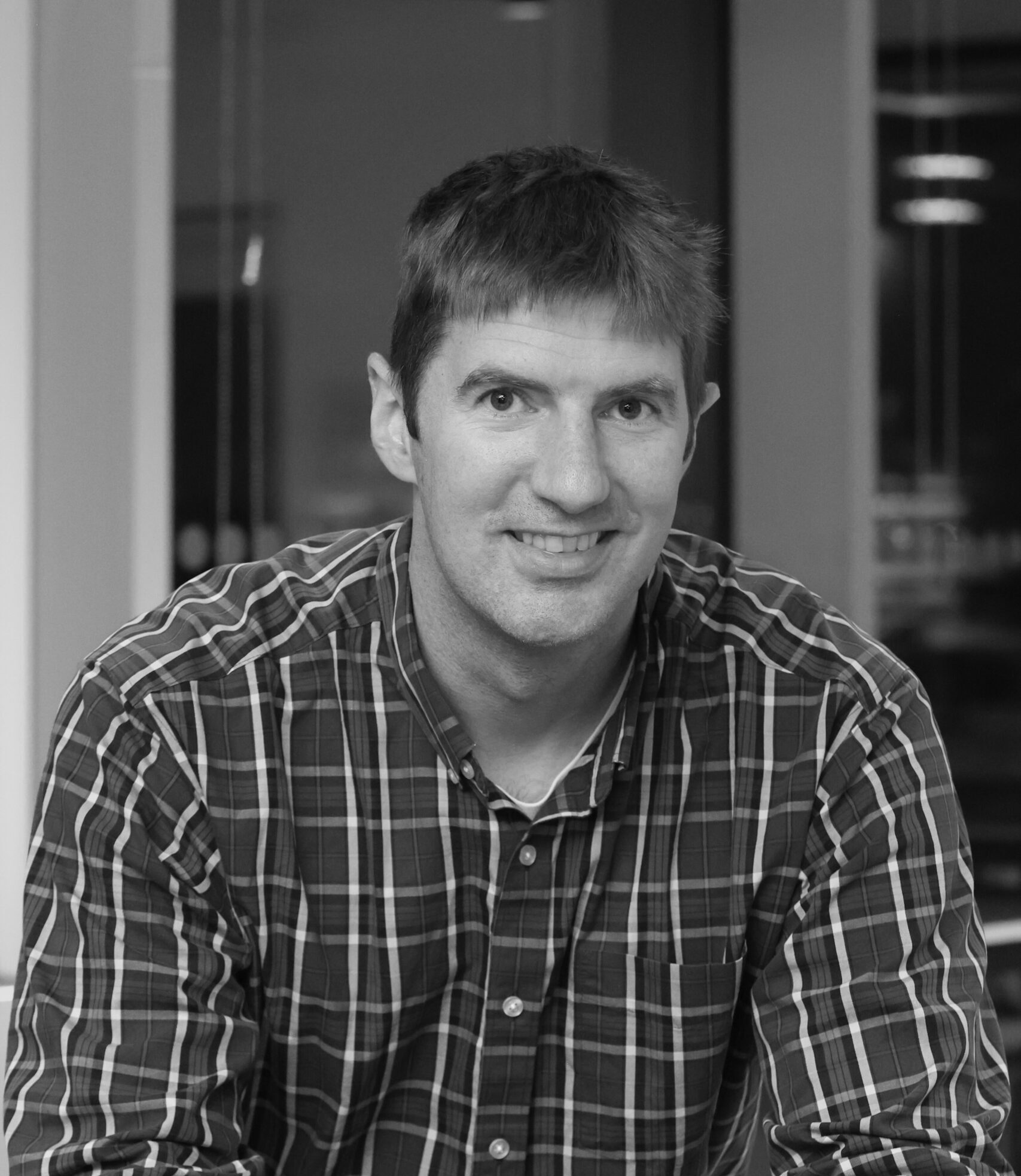
Rush Bartlett is co-founder and CEO of Sluice AI and is an associate director of corporate innovation and education at Stanford Mussallem Center for Biodesign at Stanford University.


 Articles
 Podcasts
 Videos
 Publications
 New Horizons
 In Focus
 Innovate Together
 Global Impact
 SDG Champion Edition
 Creative Galway
 AI & Human Creativity
 Sustainability
 Equality
 Arts
Arts Business
 Law
Law Medicine
 MedTech
 Science
 Sport
Sport Sustainability
 Impact Toolkit & Case Studies
 Events