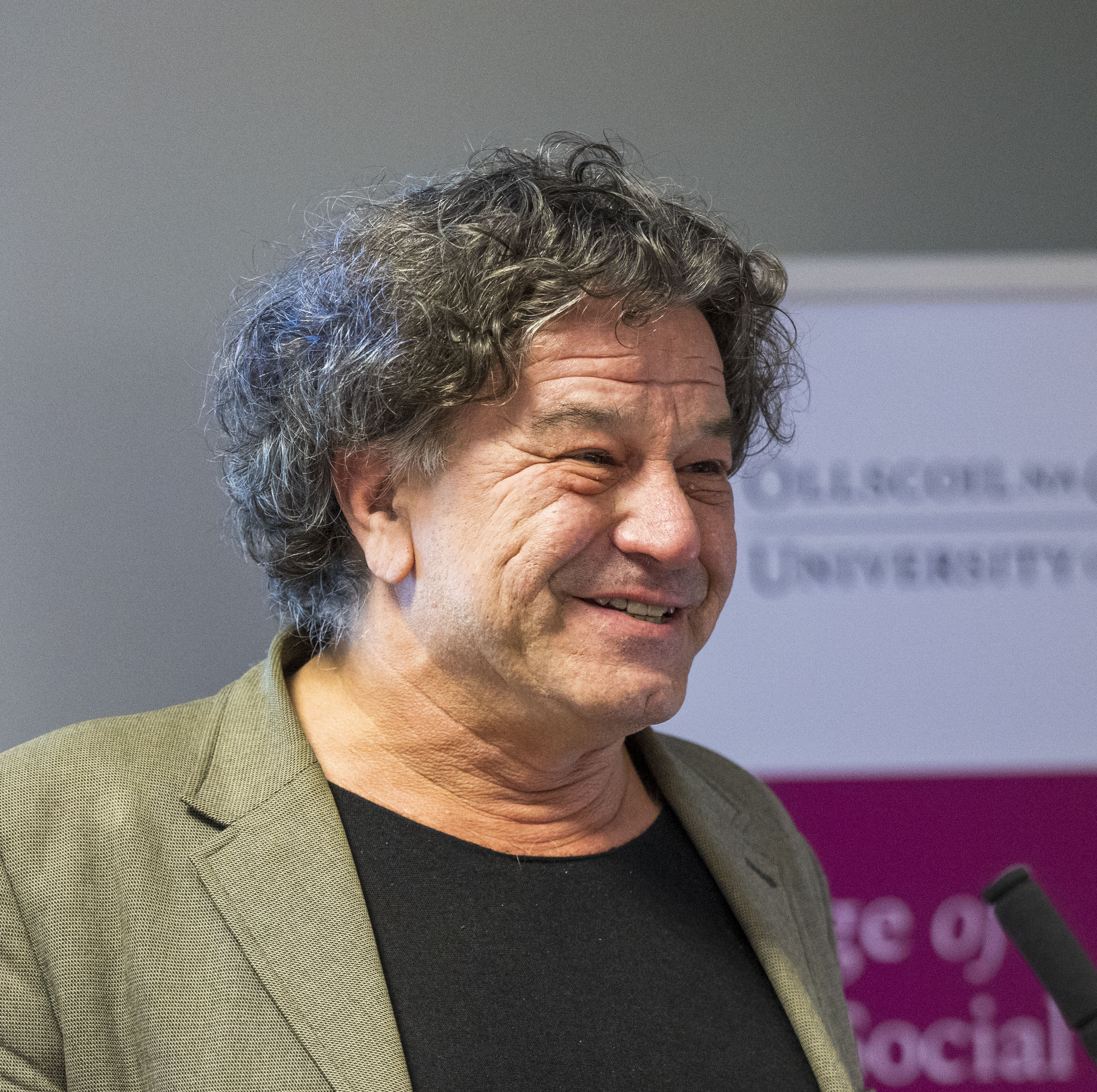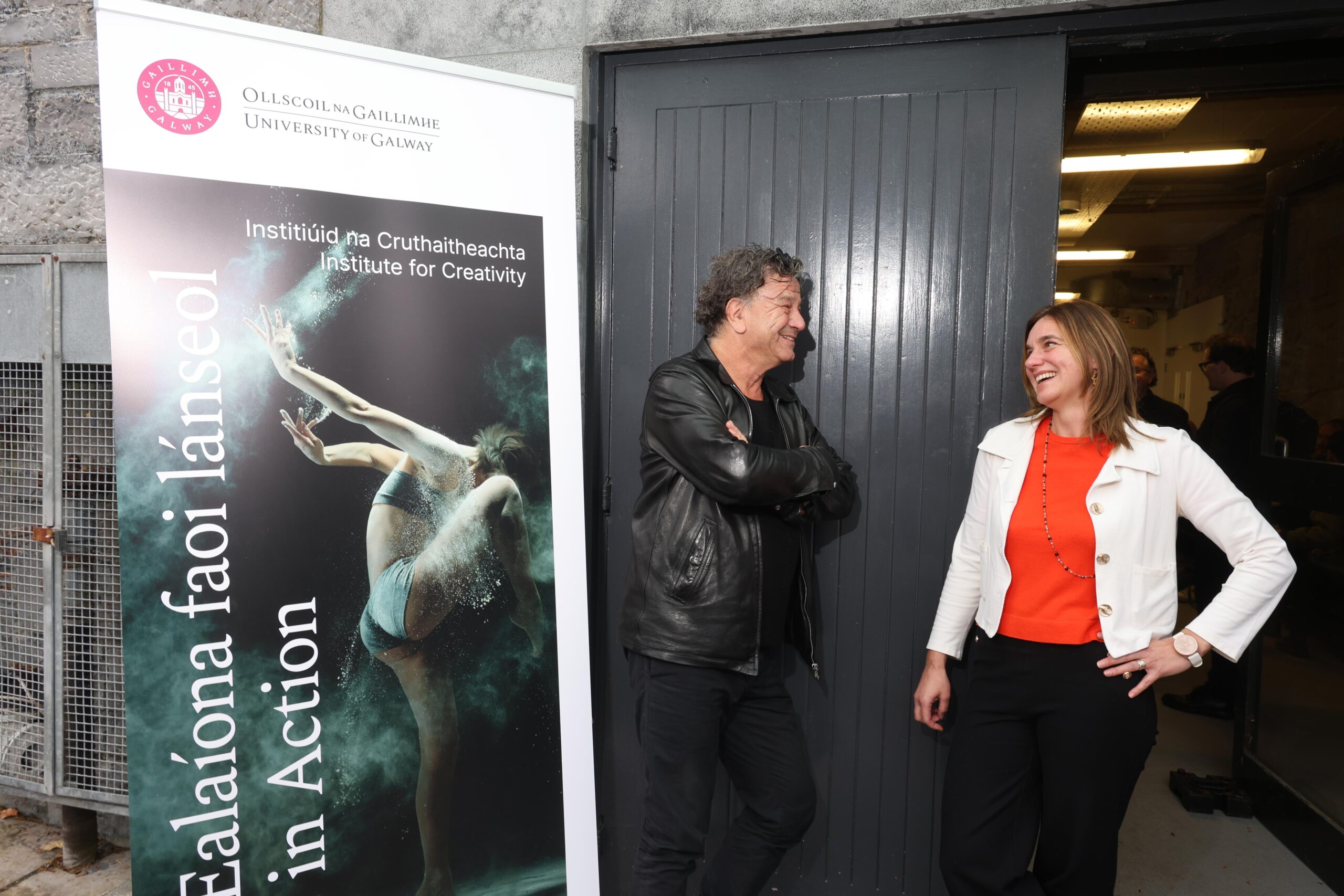

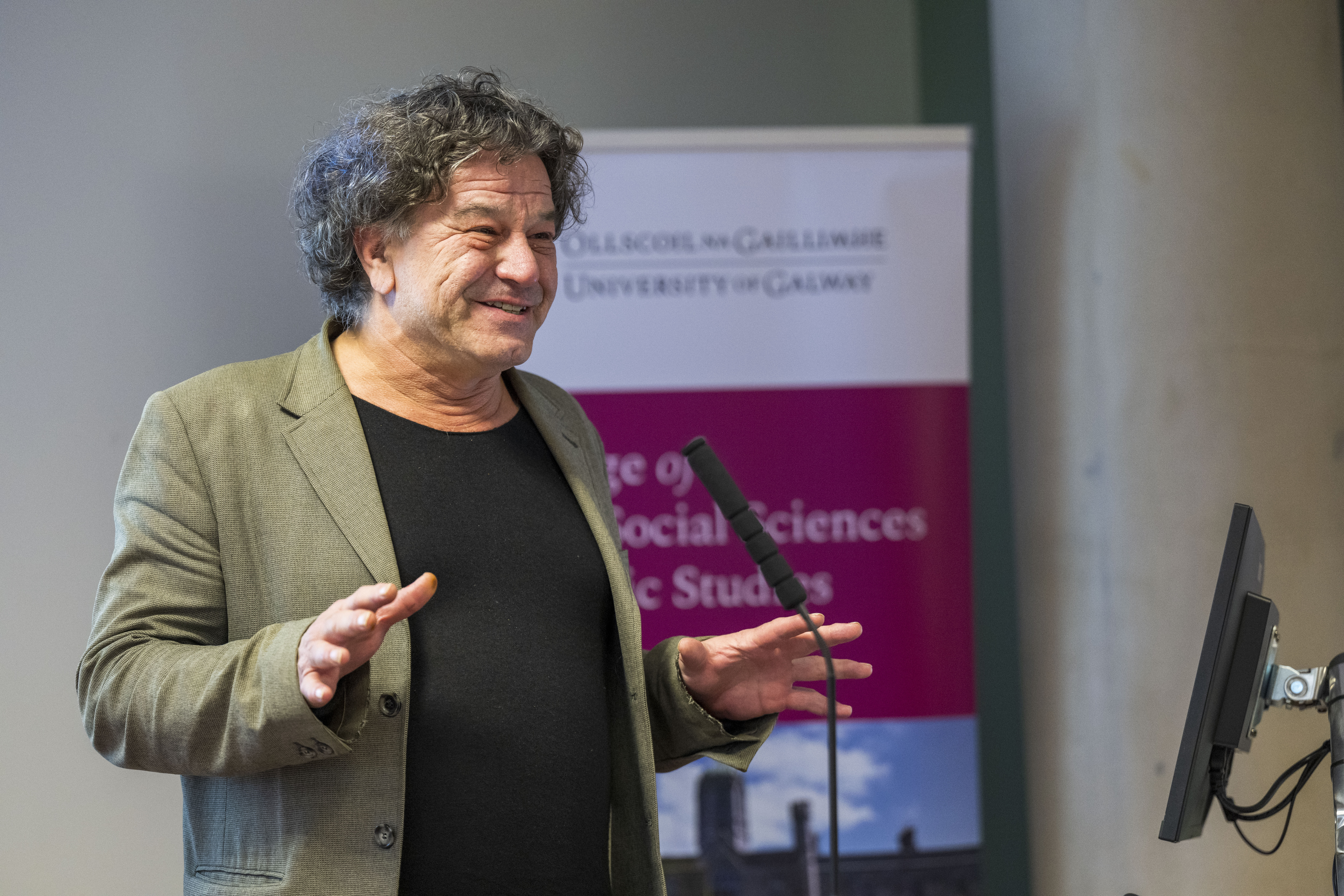
Prof Florian Schneider, Director of University of Galway’s Institute for Creativity, connected with Cois Coiribe to shed light on the recent expansion of the University’s creative offerings. In this article, he explores creative thought, cross-discipline approaches to creativity, and what the future may hold for creative process.
Demystifying the Essence of Creativity
What does it mean today to be creative? Creativity is usually associated with leisure time, such as after work or at the weekend. This is supposed to be the timeframe when we can engage in activities that do not serve an immediate purpose, allowing us to escape routines that force us to function in a predefined way.
In a conventional sense, creativity provides a range of exceptional opportunities to experiment, run through different scenarios, and become someone else than the persona we simulate when we work to earn money. Those days are over. Leisure time has become a battleground for self-optimisation, while creativity is increasingly demanded in the workplace. We find ourselves in a world shaped by uncertainty – fragile, complex, and unpredictable.
How can we learn to navigate fragile, unforeseeable, and complex situations without being paralysed by fear and desperation? How can we develop the confidence and experience needed to create and adapt to change? When AI-driven systems and agents claim to give everyone access to the same knowledge, how can we make a difference that matters?
The answer to all these questions is the same: creativity.
Institute for Creativity: A Place for Creative Thought
The Institute for Creativity is a new research institute at University of Galway. It sets out to investigate a future of innovation that lies at the intersection of creativity and technology. Rather than understanding creativity as an exclusive privilege that is reserved to the domains of art and culture, the Institute will research creativity as a general condition that reshapes the manifold relationships across all faculties of knowledge: from life science to business and law, from engineering to the natural sciences.
The Institute for Creativity currently focuses on three key areas.. It leads research in the role of art and culture in fostering and driving sustainable development in rural and remote areas. It rethinks and revalues the relationship between art and culture, and health and wellbeing. And it conducts experimental research to promote cultural and linguistic diversity as a competitive advantage for Ireland and Europe.
However, creativity does not only permeate all industries. At the same time, the rapid advances in digital technologies and automation are transforming the creative industries, as well as their specific sectors, from film and television to music and performance, and from print publishing to game design.
Creative Concepts of the Future
Today, artificial intelligence is capable of generating creative content with striking results, using methods that were once thought to be the sole preserve of human creativity and imagination. Virtual production technologies merge digital and physical worlds in real time. These developments demand new skills and competencies, new forms of literacy to engage meaningfully with evolving tools, technologies, and practices. They give rise to entirely new divisions of creative labour that needs to be investigated, anticipated, and shaped by knowledge and research, but also through research conducted within the arts and through the means of the arts.
Ultimately, the Institute for Creativity will become a platform for collaborative, cross-disciplinary research into the impact of cultural diversity, creative technologies, and artistic practice. Through this work, the research will pave the way for next-generation collaborations between art and science, between research, policy, and industry.
Unlocking this potential is particularly urgent for Galway and for the West of Ireland as a creative hub, and equally significant at national and European levels.
With this mind, the Institute for Creativity will host the 17th Conference of the Society for Artistic Research as part of the 2026 International Forum on Artistic Research. Taking place at University of Galway from the 23rd to the 26th of June, the conference explores the theme “Endangered Conceptual Worlds”, addressing artistic research across social, cultural, and political contexts, with a focus on minoritised languages and precarious knowledge systems. Standard registration closes 10 June (subject to availability). Further information is available at the Society for Artistic Research 2026 website.
Together, we can tackle challenges for practice-based research in the arts, support endangered conceptual worlds, and foster a more creative tomorrow.


 Articles
 Podcasts
 Videos
 Publications
 Change Makers
 New Horizons
 In Focus
 Innovate Together
 Global Impact
 SDG Champion Edition
 Creative Galway
 Sustainability
 Equality
 Arts
Arts Business
 Law
Law Medicine
 MedTech
 Science
 Sport
Sport Sustainability
 Impact Toolkit & Case Studies
 Events