
Ireland’s Clean Air Sites as Global Benchmarks
Ireland is home to some of the cleanest environments in the world, from crystal-clear waters to abundant green spaces and a consistently strong Air Quality Index (AQI). People enjoy a healthy lifestyle on this island from low exposure to human-induced climate hazards, which results in less health and safety concerns in relation to the environment.
The conservation of Ireland’s natural landscapes, along with people’s preference to live close to nature, plays a key role in the country’s sustainable progress. With very few urban centres, a blend of medieval Europe with modern convenience, and its size, geography, and location bordering the Atlantic, Ireland makes the perfect place to study the baseline. It’s a natural laboratory for studying and modelling the quality of air.
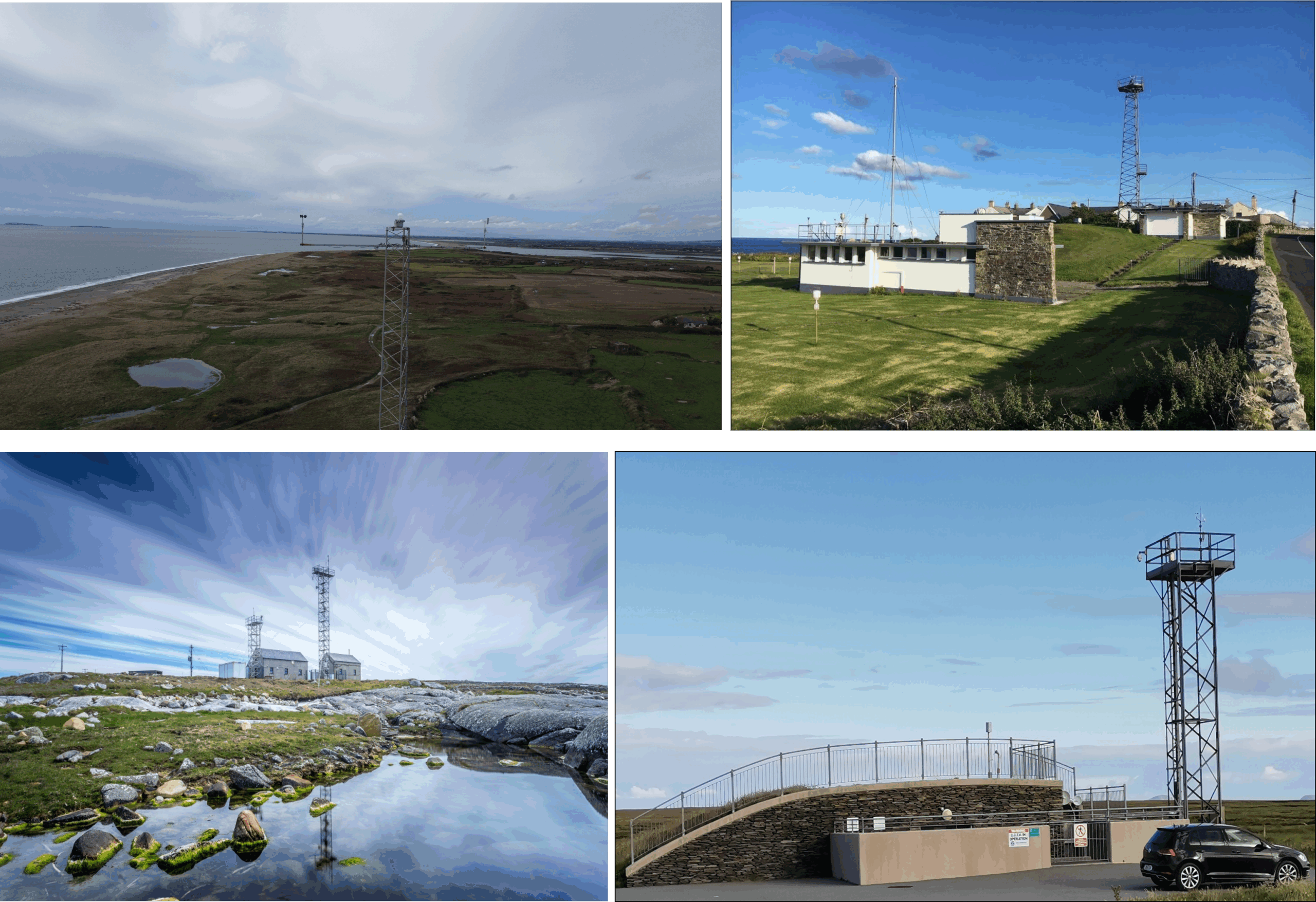
In 2022, Ireland officially joined Integrated Carbon Observation System (ICOS), funded by the European Union. While many European countries suffer from worsening air quality, due to rapid urban expansion and modernisation, Ireland has preserved its air quality, especially in less populated regions. This makes the country an ideal location to observe the atmosphere.
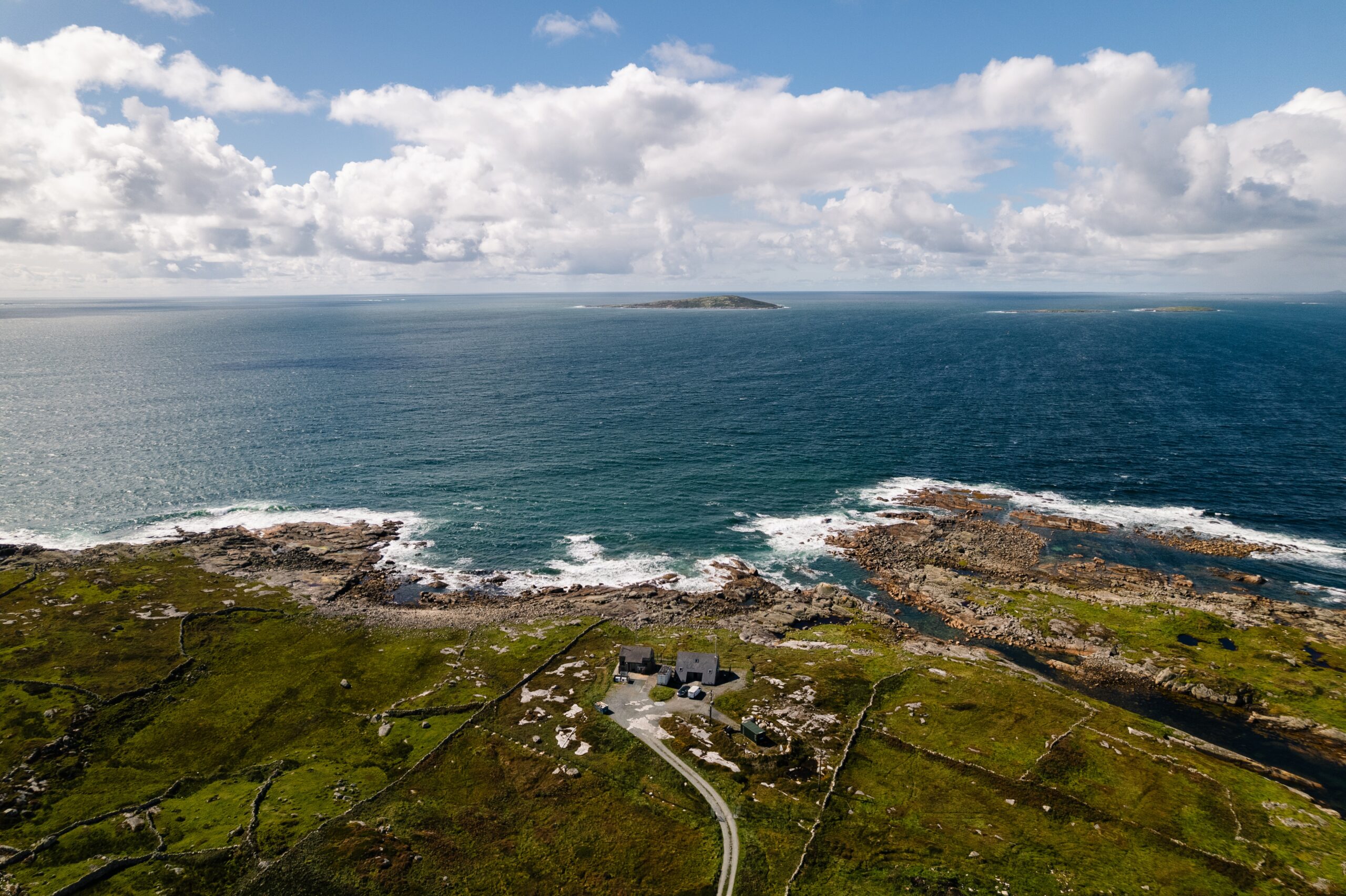
Under ICOS, Ireland hosts four atmospheric monitoring stations, with Mace Head serving as the oldest and most important ‘supersite’. Established in the 1950s, Mace Head has become a leading global site for atmospheric observations. From this remote Atlantic coast vantage point, our scientists capture clean maritime air masses as well as air influenced by continental Europe, offering a unique window into global background conditions and pollution transport. Scientists at Mace Head measure a wide range of atmospheric components, including carbon dioxide (CO₂), methane (CH₄), nitrous oxide (N₂O), ozone (O₃), radon, and aerosols. These data streams are crucial for assessing how effectively international treaties and conventions are protecting the atmosphere.
Complementing Mace Head are three other key Irish ICOS sites, which form the national observation network. Valentia Observatory, operated by Met Éireann, has a long history of meteorological and atmospheric measurements and serves as an important regional reference site. Elsewhere, in collaboration with the EPA and Teagasc, new greenhouse gas (GHG) and air pollution monitoring stations have been established at Carnsore Point, Co. Wexford, and Malin Head, Co. Donegal. Collectively, these stations provide a comprehensive picture of the gases and particles entering and leaving Ireland, offering an essential dataset for understanding both local emissions and transboundary air pollution.
Observations gathered at these sites are not just about data on a screen; they reflect decades of expertise, innovation, and international collaboration. Researchers across this network of stations use cutting-edge technology, from high-precision gas analysers to LiDAR systems and advanced meteorological sensors, all calibrated to ICOS standards. Increasingly, machine learning techniques are being applied to a vast number of datasets, uncovering new patterns, improving the accuracy of atmospheric models, and enabling faster, more reliable analysis.
The importance of this work reaches far beyond Ireland’s shores. Clean air sites like Mace Head serve as global benchmarks, helping researchers to detect subtle shifts in the background concentrations of greenhouse gases and trace pollutants. In a rapidly changing climate, maintaining a stable, long-term reference record is invaluable. When a new emission trend appears in Europe, Asia, or North America, researchers often look first to baseline sites, like those in Ireland, to determine whether it represents a true global atmospheric signal or a regional anomaly.
It’s important to say that behind these sophisticated instruments is a dedicated team of scientists, engineers, and technicians who keep the stations operating year-round, often in harsh and challenging coastal conditions. Their work requires precision, patience, and a deep curiosity about how the planet breathes.
At Mace Head, for example, instruments are monitored through fierce Atlantic storms, ensuring a continuous stream of data, even as salt spray and high winds batter the coastline. Many pioneering scientists have spent decades maintaining these long-term records, training the next generation of atmospheric scientists, and collaborating with international partners.
For them, every data point tells a story, of shifting winds, distant pollution plumes, or the quiet background of a clean Atlantic breeze. Their commitment ensures that Ireland’s contribution to global atmospheric science is not only accurate but enduring, a testament to human persistence in understanding and protecting our clean air.
Through ICOS, Ireland is now poised to establish a long-term greenhouse gas database and analysis system that will make these high-quality observations accessible to scientists, policymakers, and the public. This effort will strengthen Ireland’s role in international climate research while supporting national policy development across air quality, agriculture, and renewable energy.
In an era when the world is under mounting pressure to meet climate targets, Ireland’s clean air sites offer something rare: a glimpse into what an unpolluted atmosphere looks like, and how it behaves.
They remind us that understanding the natural state of our planet’s air is the first step toward protecting it. From the windswept coast of Mace Head to the southern tip of Carnsore Point, Ireland’s atmospheric observatories quietly watch over the air we all share, measuring, documenting, and safeguarding our collective future.

About Mace Head Atmospheric Research Station
Mace Head is an atmospheric observational facility situated on a rocky headland, just outside Carna in Conamara. It sits at the interface between the vast, stormy Atlantic and Western Europe. A jewel in the crown of University of Galway’s outpost research facilities, it is the only World Meteorological Organisation and Global Atmosphere Watch station located in mid-latitude Western Europe and is, thus, a vital monitoring location of global, regional, and national significance. Mace Head monitors the composition and the changing state of our atmosphere, working with national and international partners to identify the cause and impact of air pollution, and to further our understanding of the processes affecting our changing climate.
Profiles


 Articles
 Podcasts
 Videos
 Publications
 New Horizons
 In Focus
 Innovate Together
 Global Impact
 SDG Champion Edition
 Creative Galway
 AI & Human Creativity
 Sustainability
 Equality
 Arts
Arts Business
 Law
Law Medicine
 MedTech
 Science
 Sport
Sport Sustainability
 Impact Toolkit & Case Studies
 Events