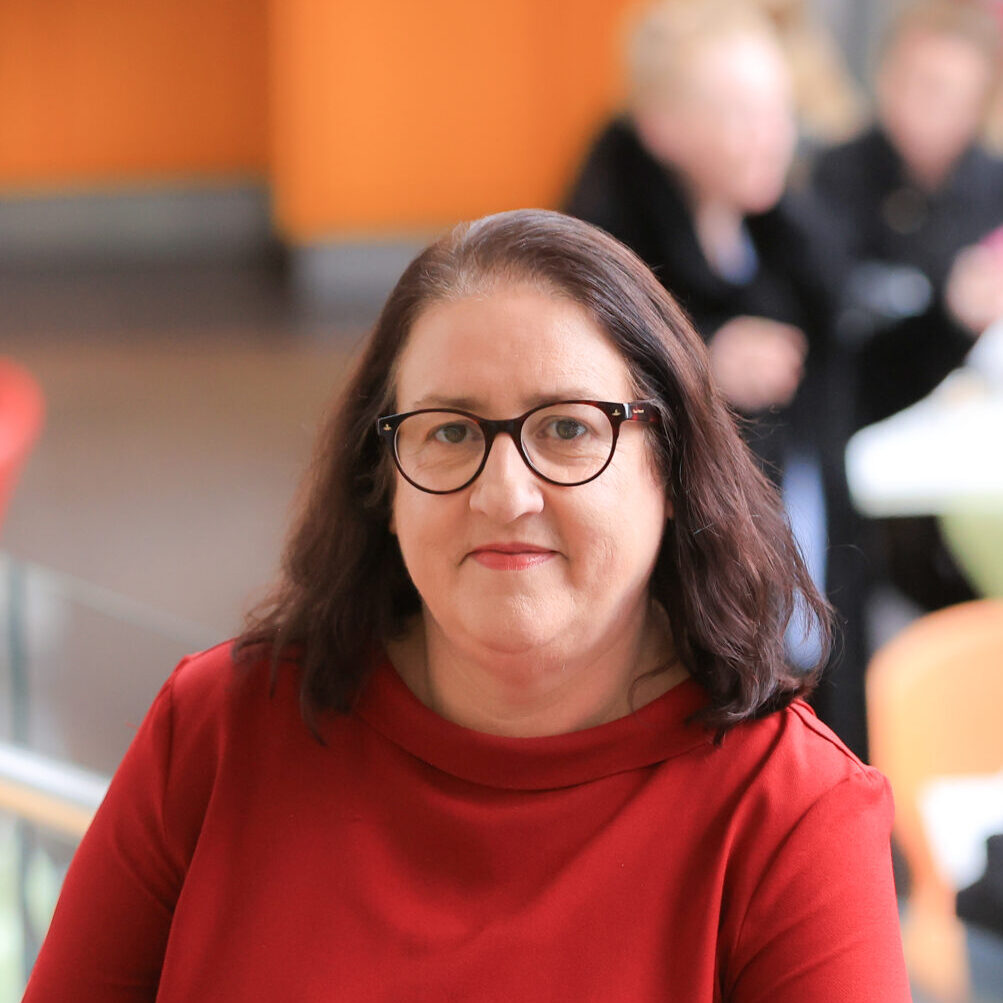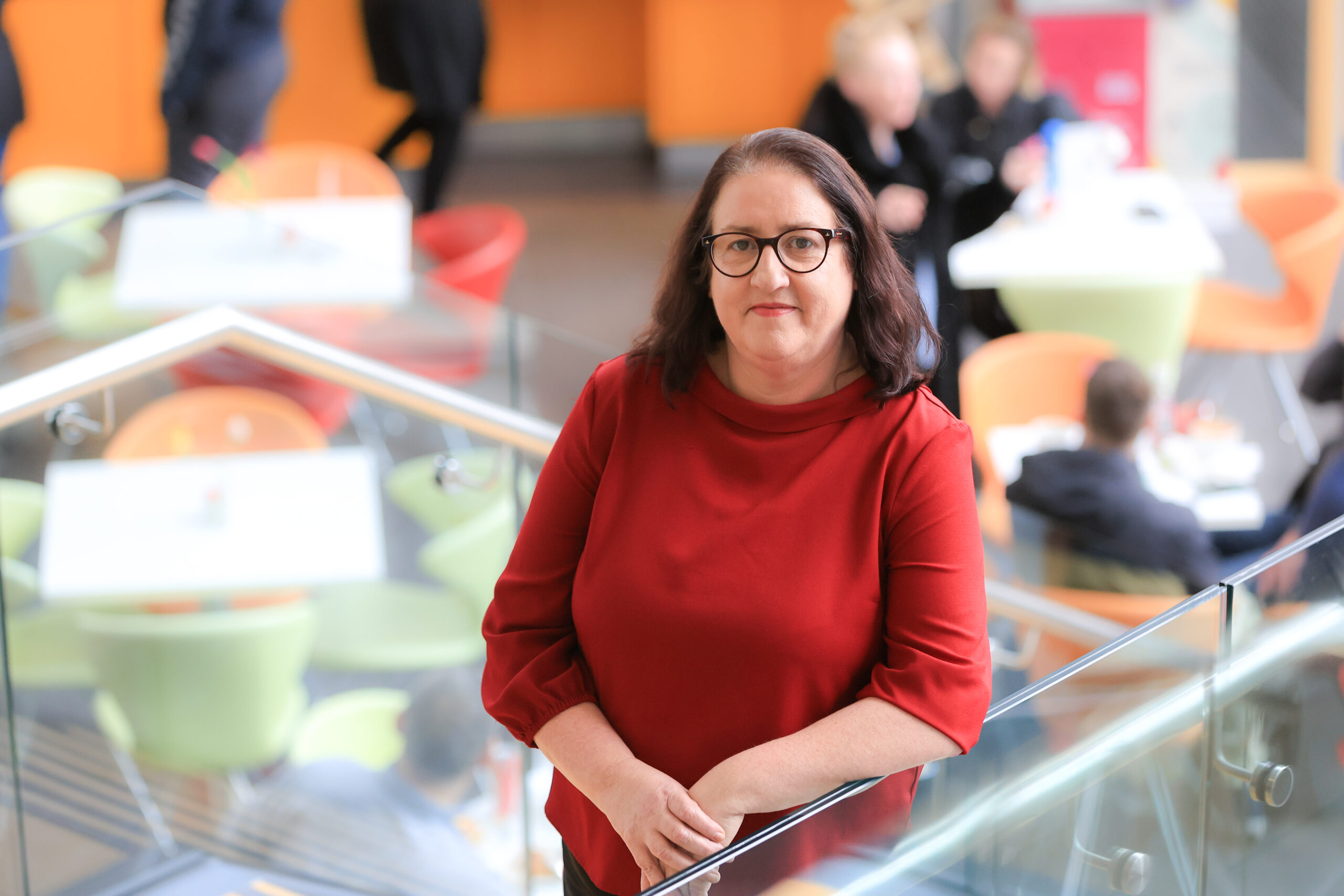

How can research be used to enable equity across the lifecourse? What methods and approaches can we use to enable equity and promote rights and justice across the lifecourse? How can research contribute to social solidarity in relation to policies and practices that affect people across the lifecourse? These are some questions driving Professor Caroline McGregor, Director of the Institute for Lifecourse and Society (ILAS). In this Cois Coiribe interview, she reflects on leading a University of Galway research institute and why understanding the core or arc of human lives, from birth to old age, has never mattered more.
Since becoming Director of the Institute for Lifecourse and Society (ILAS) in September 2024, I’ve been continuously impressed by the breadth of work at the Institute and the passion our community of researchers holds for their subjects. While I had the pleasure of being part of one of the ILAS centres – the UCFRC – for over a decade, it wasn’t until I took on the role of Director that I have come to fully appreciate the scope, contribution, and potential of ILAS to provide added value to the sum of its constitute centres and units.
At ILAS, the big questions are also the everyday ones: how do people navigate the turning points in their lives? What binds generations together? Who gets a voice in shaping the society we live in? Researchers here work across interconnected themes – life transitions and human flourishing; intergenerational relations, social health and wellbeing; and civic engagement and participation, with a shared conviction that good research should change not just what we know, but how we do.
ILAS: Leading with Research, Impact, and Purpose
The work of ILAS stands out for its interdisciplinarity, its focus on engaged research, and its emphasis on pathways to impact. My role as Director of the Institute is to lead the implementation of our strategic objectives to enhance equity across the lifecourse, focused on four main areas:
Our objectives align with our two constituent colleges – College of Arts, Social Sciences, and Celtic Studies (CASSCS) and College of Business, Public Policy and Law (CBPPL) – and our University Strategy. While potentially contributing to all four Research Pillars of the University, ILAS is especially aligned with Culture, Creativity and Society as well as Innovation and Health, with an emphasis on wellbeing.
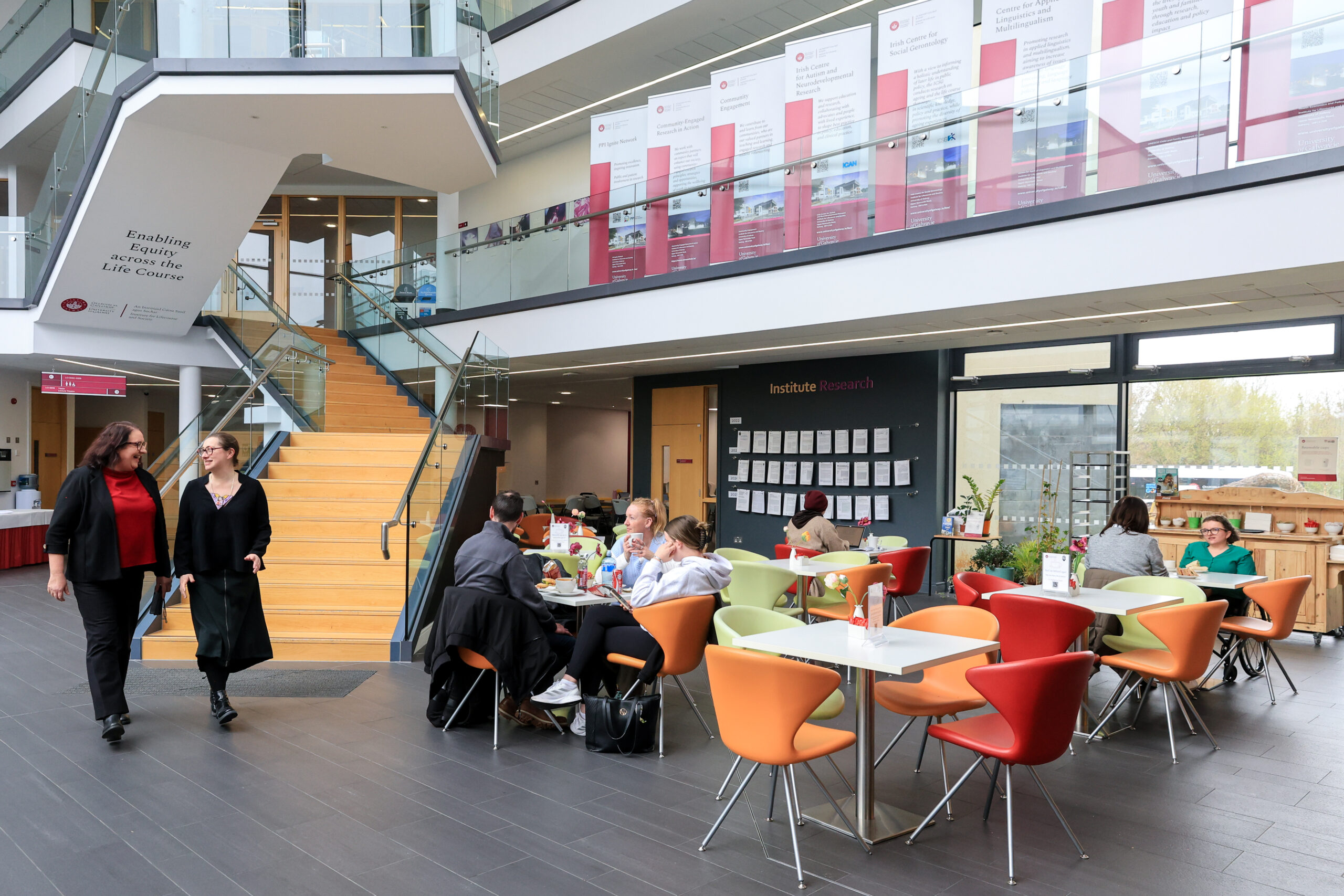
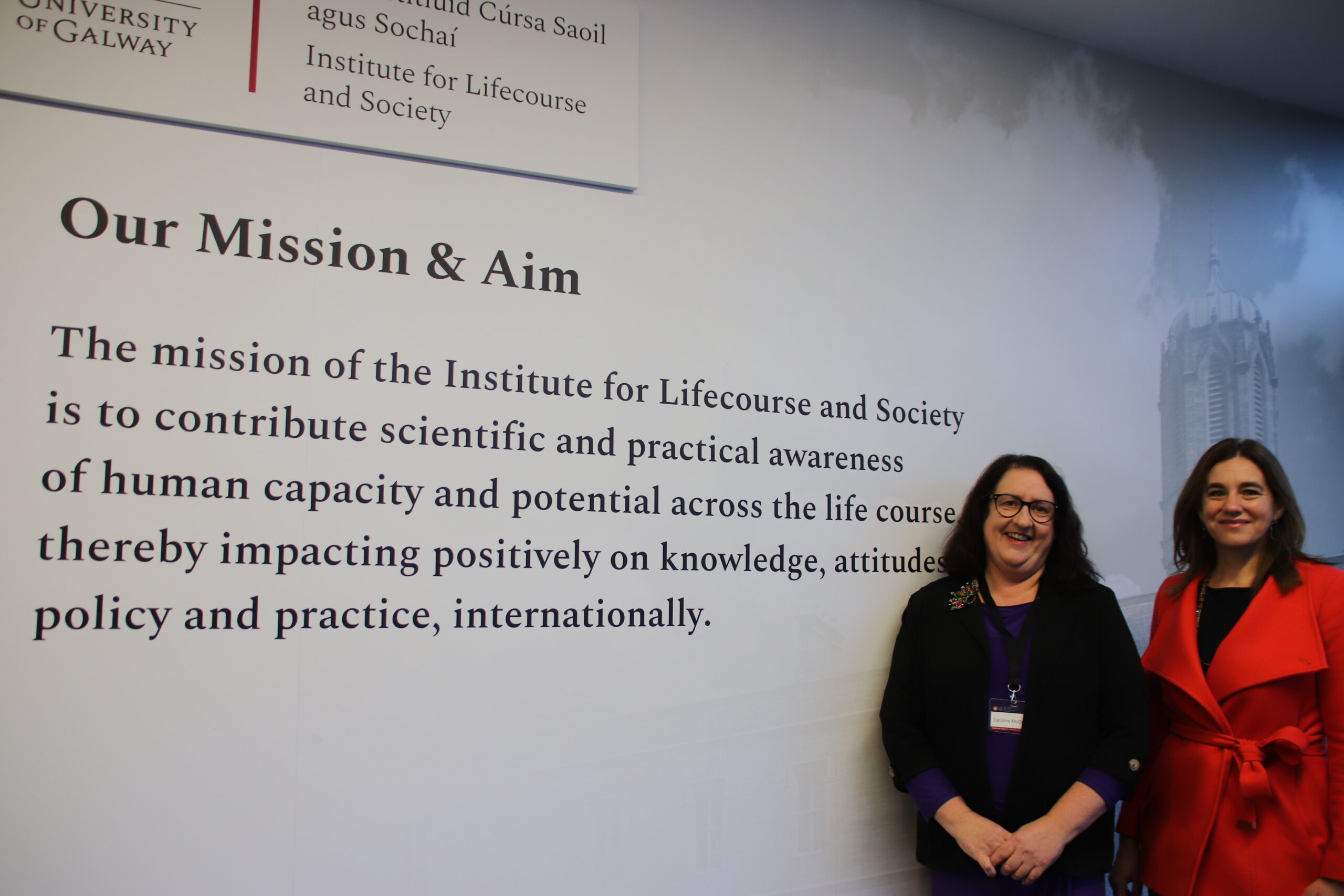
Our strategic objectives also reflect the mission of ILAS, proudly displayed as you come into the ILAS building:
“To contribute scientific and practical awareness of human capacity and potential across the lifecourse, thereby impacting positively on knowledge, attitudes, policy and practice, internationally.”
Lifecourse Through Meaningful Participation
To achieve its mission, ILAS frames its research around key lifecourse themes that explore how people experience life transitions and pursue human flourishing, how intergenerational relationships shape social health and wellbeing, and how civic engagement and participation can be strengthened across society. Central to this approach is a lifecourse perspective on policy, a commitment to solidarity across generations, and a focus on ensuring that voice is meaningfully included in research, practice, and decision-making. This broad and interdisciplinary agenda is reflected in the Institute’s diverse centres. Some focus on specific populations or stages of life, including the UNESCO Child and Family Research Centre, the Irish Centre for Social Gerontology, the Centre for Disability and Law, and the Centre for Autism and Neurodiversity. Others have a thematic focus like the Centre for Applied Linguistics and Multilingualism (CALM), Community Engaged Research in Action (CORA), and the Health Economics and Policy Analysis Centre (HEPAC). Alongside these are two University-wide units that strengthen how ILAS engages with wider society: Community Engagement; Patient and Public Involvement in Research – PPI Ignite Network. Both support deeper and more structured forms of public participation in research.
The unifying purpose emerges to enable equity across the lifecourse. This includes research focused on disability across the lifecourse, support and protection of children and families, and transitions across the lifecourse, such as care provisions for children, persons with a disability, and older people. Agency and voice, as well as health and wellbeing, are emphasised. Diverse projects are focused on community and place, informing human rights and social justice, such as access to health and social care interventions and health technologies to improve health and wellbeing. Alongside this, critical engagement with structure, policies, and processes that affect persons across their lifecourse is key. This includes a concentration on social exclusion, diminished powers and rights, economic insecurity, accumulated disadvantage, solidarity and justice, and collaboration between systems and services.
Underlying all of this work is a consistent emphasis on ‘meaningfully involved voice’. This reflects a commitment to more inclusive and equitable approaches to research and service development, ensuring that those most affected by policies, systems, and interventions are actively involved in shaping them.
Paving a Multidisciplinary Path
As Director, an important aspect of my role is to amplify and support three distinctive and interconnected features across the work of ILAS: (1) interdisciplinarity, (2) engaged research, and (3) emphasis on societal impact (pathways and outcomes).
A great benefit of being Director of an institute like ILAS is access to researchers across all career states from a diverse range of disciplines, plus so many excellent partners. We get participation from policy, direct lived experience, PPI (patient public involvement), practice, and also from wide-ranging national, regional, and international disciplines and experiential backgrounds.
As a cross-disciplinary institute, we have excellent existing and emerging collaborations across colleges and research institutes. Through being part of such a dynamic ecosystem, the potential for collaborative leadership is immense. Cross-cutting themes include interconnecting value frameworks from diverse multidisciplinary fields to generate social and economic measures of value for policy and practice interventions, as well as investments examining issues like health and wellbeing, care, safeguarding, rights, and justice from different conceptual standpoints. We come together through community engagement and interprofessional relations, and with persons with direct and lived experience of a diversity of services, examining research-policy relationships across disciplines.
With ILAS’s significant interdisciplinary and interprofessional strength, I am excited about the range of opportunities we have to advance and inform the increased emphasis on engaged research, as reflected in our University Strategy, the most recent Research Ireland Strategy, and more widely in the fields of research, policy, practice, and education. Recognising the leadership role from ILAS in relation to societal impact, one of our projects based on ‘language and a path to justice and healing’ is featured in the current Research Ireland Strategy.
Methods of Engaged Research Towards Societal Impact
The term ‘engaged research’ is intentionally broad, reflecting ILAS’s commitment towards increased societal impact in its complexity. At its core is collaboration, working with a range of stakeholders, from policy makers and practitioners to persons with direct and lived experiences.
Building this kind of research ecosystem requires more than individual projects or funding applications. It calls for a multi-dimensional approach to capacity building, that is grounded by robust conceptual and theoretical work, trusted relationships, sound values, and effective skills. To facilitate this, we deliver our ILAS Engagement Programme, which provides regular expert and networking events – large and small, virtual and in-person – under two broad areas: ILAS Public Policy Innovation Series and ILAS International Training Series.
Supporting community engagement, PPI and participative research is a key part of the engaged research agenda and is crucial for ILAS. While we have great opportunity in our research and related activities to progress this domain of work regionally, nationally, and internationally, awareness of the stark inequality regarding who holds power over knowledge, resources, and decision making is essential. It is necessary to work collaboratively to enable greater knowledge, skills, and education about the complexity of engaged research and how we can lead it in line with our University values of respect, belonging, openness, sustainability, and excellence.
Looking to the future and ILAS’s potential to advance participative research, I am very conscious of our collective responsibility to recognise its complexity. We must make sure that we avoid risk of tokenism and also resource and support meaningful participation whilst recognising the amount of power barriers that need to be broken down to create conditions for engaged research. To inform this, as Director I can draw from the extensive expertise from our many ILAS colleagues, who have been developing engaged and impact-focused research for many decades, and from our units dedicated to PPI and Community Engagement and our collaborators, who bring with them lived experience, specific practice or policy contexts, and disciplinary expertise.
ILAS Is a Place for Everyone
Reflecting on the University’s broader commitment to purpose, people, and place, I am proud to be the current leader of ILAS and deliver our very clear purpose with an outstanding mix of people within the University and our wider communities.
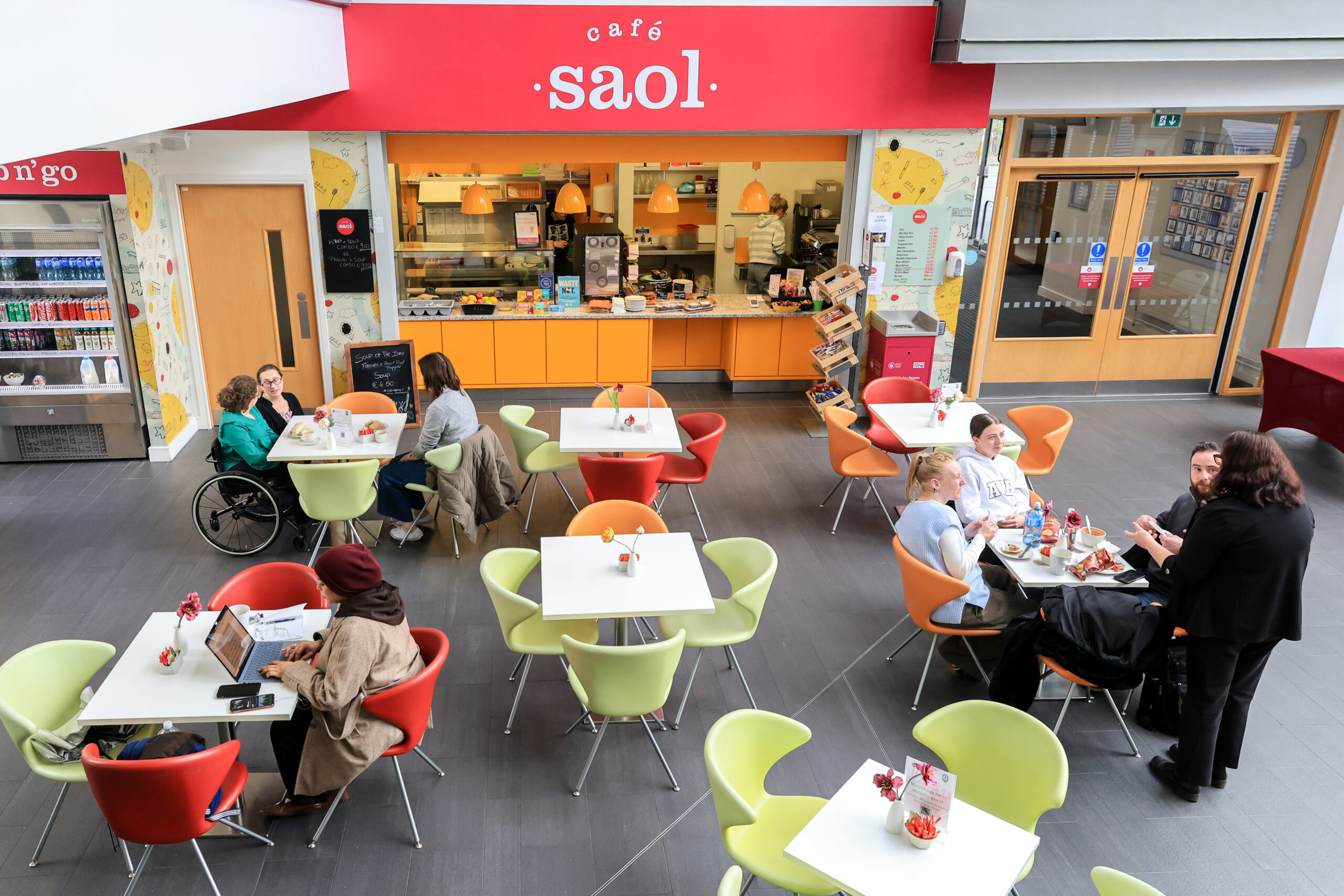
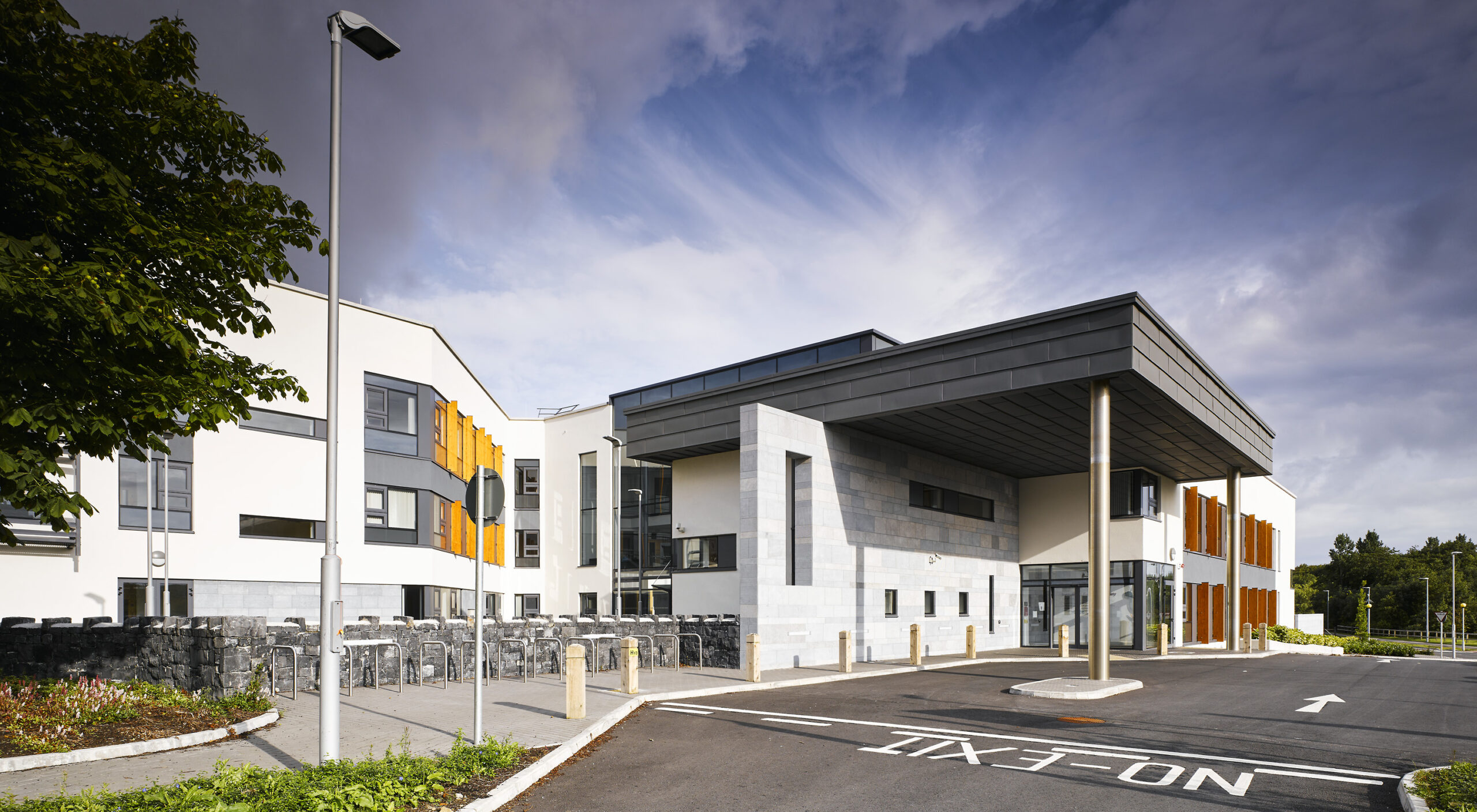
While ILAS maintains connections that span from local to global contexts – across in-person and virtual collaborations – it is also anchored in a physical home: Cursáí SAOL, meaning ‘lifecourse’. With funding support from Atlantic Philanthropies and established over a decade ago, the building was purpose-designed to support scholarship focused on the lifecourse and continues to embody that vision. Today, the ILAS building provides a welcoming and open hub for ILAS staff, students, visitors, partners, and public. It also serves as a popular site for University colleagues to immerse themselves in the research culture of ILAS and our values of openness and respect. Last but not at all least, it enhances the Institute’s accessibility to our wider community.


 Articles
 Podcasts
 Videos
 Publications
 Change Makers
 New Horizons
 In Focus
 Innovate Together
 Global Impact
 SDG Champion Edition
 Creative Galway
 Sustainability
 Equality
 Arts
Arts Business
 Law
Law Medicine
 MedTech
 Science
 Sport
Sport Sustainability
 Impact Toolkit & Case Studies
 Events