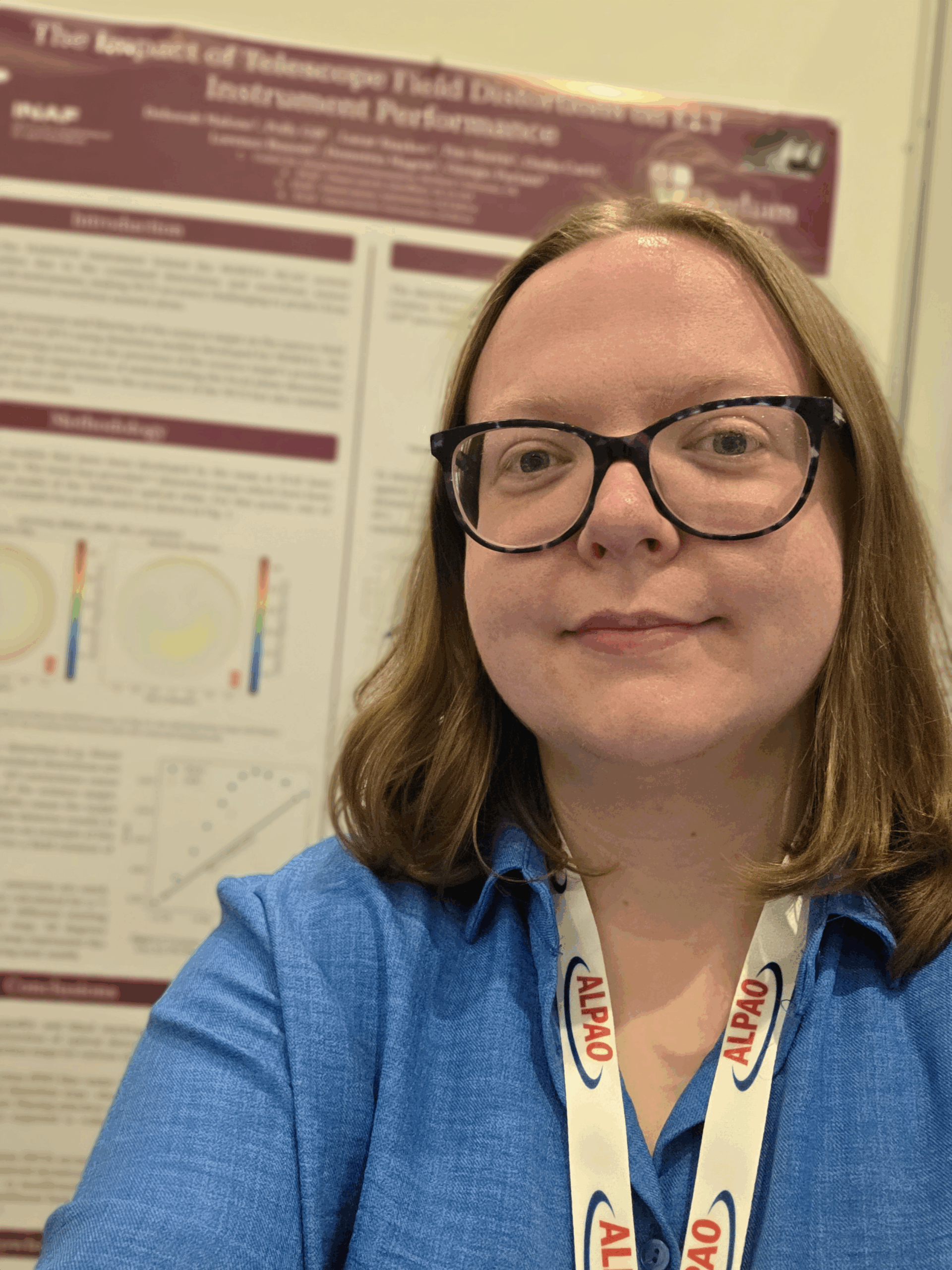

This feature explores Dr Deborah Malone’s journey through her University of Galway PhD in Astronomical Instrumentation, with particular focus on her research that involved working at the European Southern Observatory (ESO) with the Extremely Large Telescope (ELT). She discusses her entry into the University via the Foundation Course, moving into a BSc and finally a PhD before joining the Centre for Advanced Instrumentation at Durham University as a Postdoctoral Research Associate. She also speaks to the importance of international collaboration and offers advice for aspiring researchers.
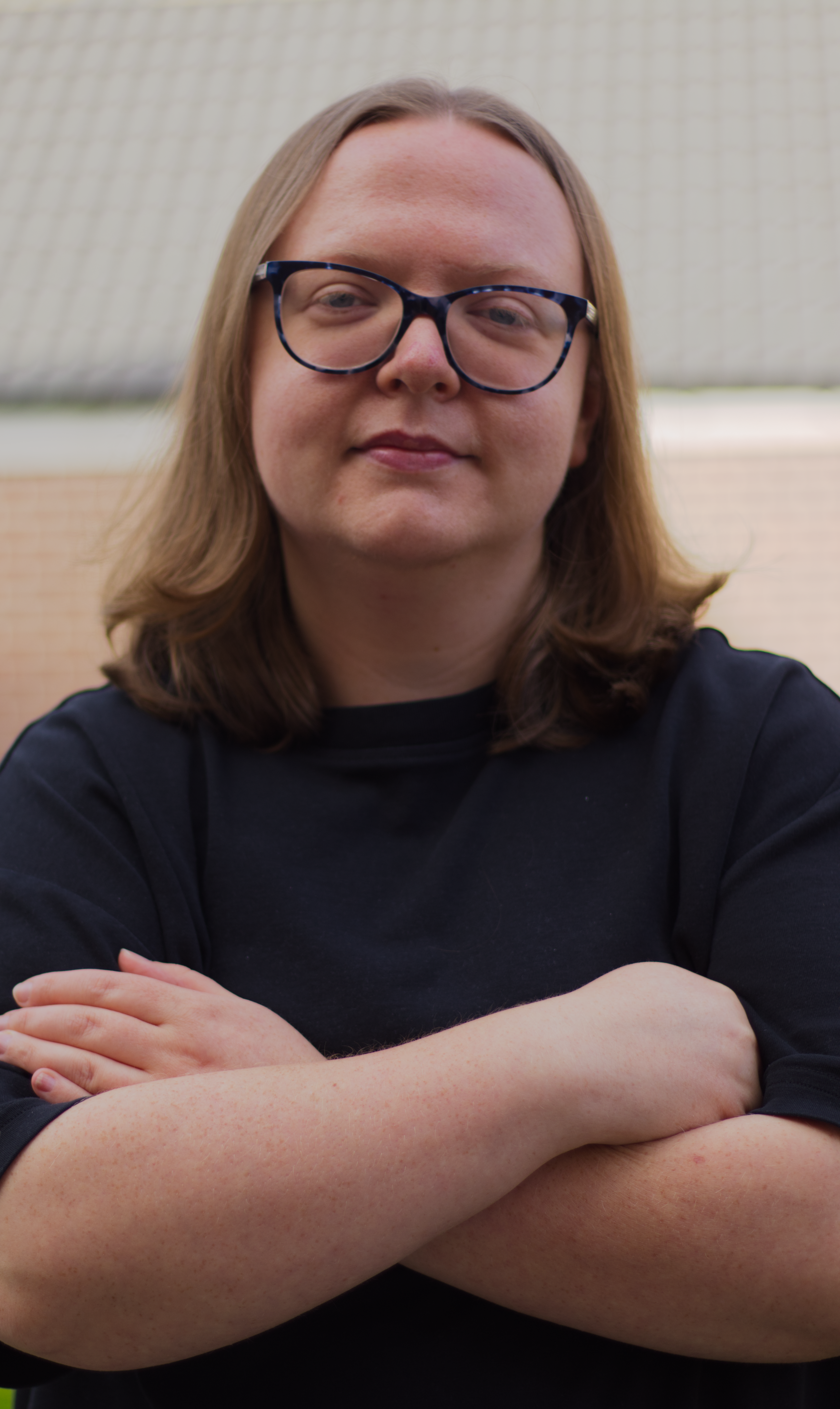
Meet Deborah Malone…
My name is Deborah Malone, and I am a Postdoctoral Research Associate at the Centre for Advanced Instrumentation at Durham University.
I completed both my Bachelor’s degree and PhD at University of Galway, in Astrophysics and Astronomical Instrumentation, respectively. I have always had an interest in astronomy and astrophysics since I was young. Growing up in rural Mayo meant many a night enjoying the beautiful dark skies, which, as a kid, always made me wonder what was out there.
In school, I had an interest in science, but not much in anything else! It ended up frustrating me, and I left school in fifth year. After a couple of years of odd jobs and living abroad, I decided I wanted to go to university and applied for the Foundation Course in Science, Technology, and Engineering at University of Galway. Doing that course was possibly the best decision I ever made; it re-ignited my love of science and sparked a new appreciation for mathematics.
I decided I wanted to carry on in my education and applied for the BSc Physics with Astrophysics course at the University. During my Bachelor’s degree, the astrophysics group had the opportunity to visit an observatory in Italy and do some real, hands-on astronomy practice. On one of those evenings, our group had a tour of the telescope. I never really thought about the technology behind the science before that night, but this really piqued my interest. When an opportunity came up to pursue a PhD in Astronomical Instrumentation, I had to go for it!
While pursuing your PhD in Astronomical Instrumentation at University of Galway, you had the chance to work at the European Southern Observatory (ESO) in Garching, Germany. Can you walk us through this process?
While completing my PhD at University of Galway, the Irish Research Council, who funded my work, had a partnership with the European Southern Observatory. Each year, the IRC would fund up to two students to spend one or two years of their PhD undertaking research at the ESO headquarters, either in Germany or Chile. I applied for a technology and engineering studentship for one year, based in Germany. I had one of the most nerve-wracking interviews of my life but was, thankfully, successful and began my studentship in November 2021. I ended up staying at ESO for 14 months in the end, and I loved my time there. It was a fantastic experience to work with some of the best experts in Adaptive Optics, and I still collaborate with many of them today.
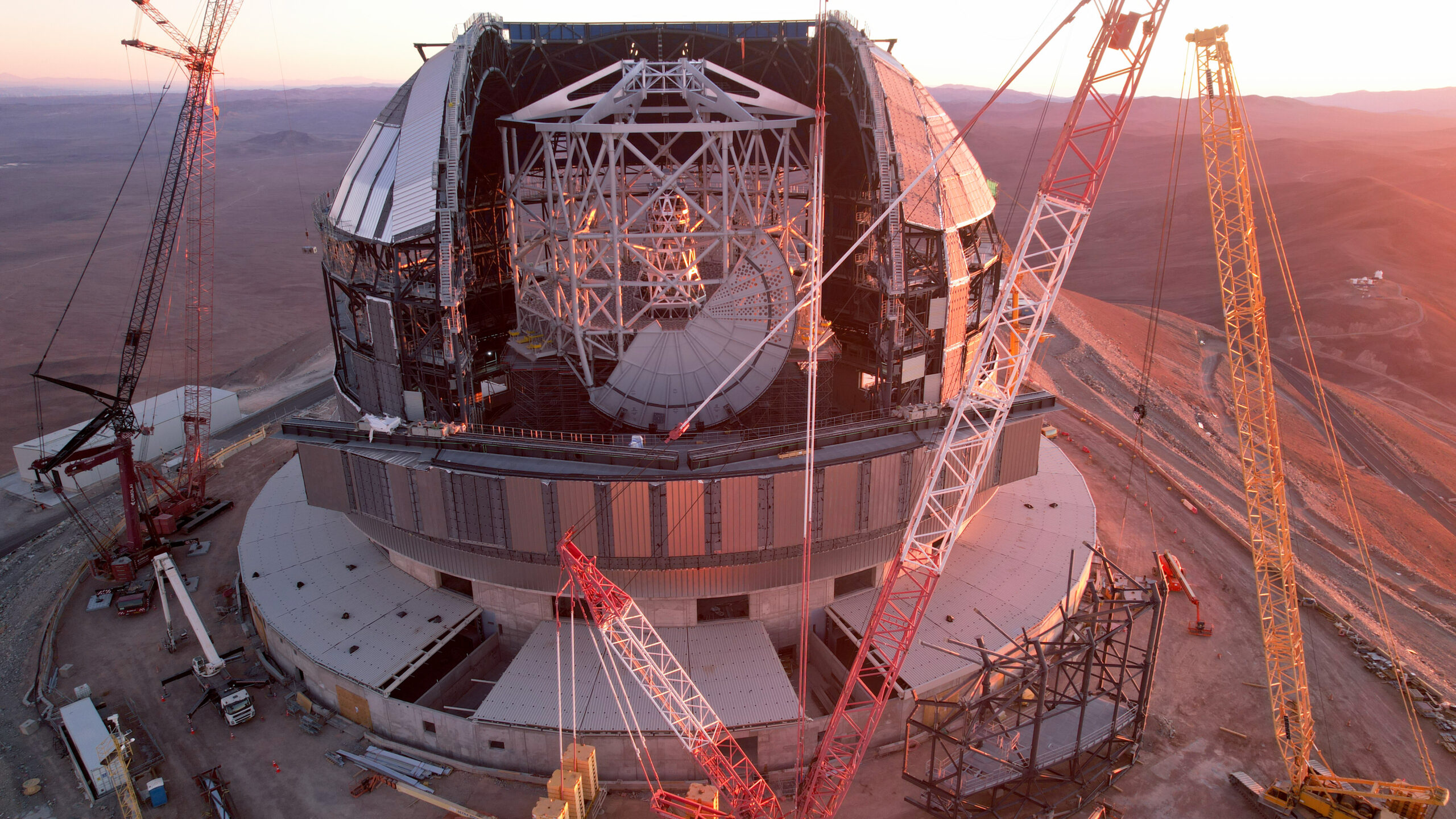
Can you elaborate on any particular projects you took part in using the Extremely Large Telescope (ELT)?
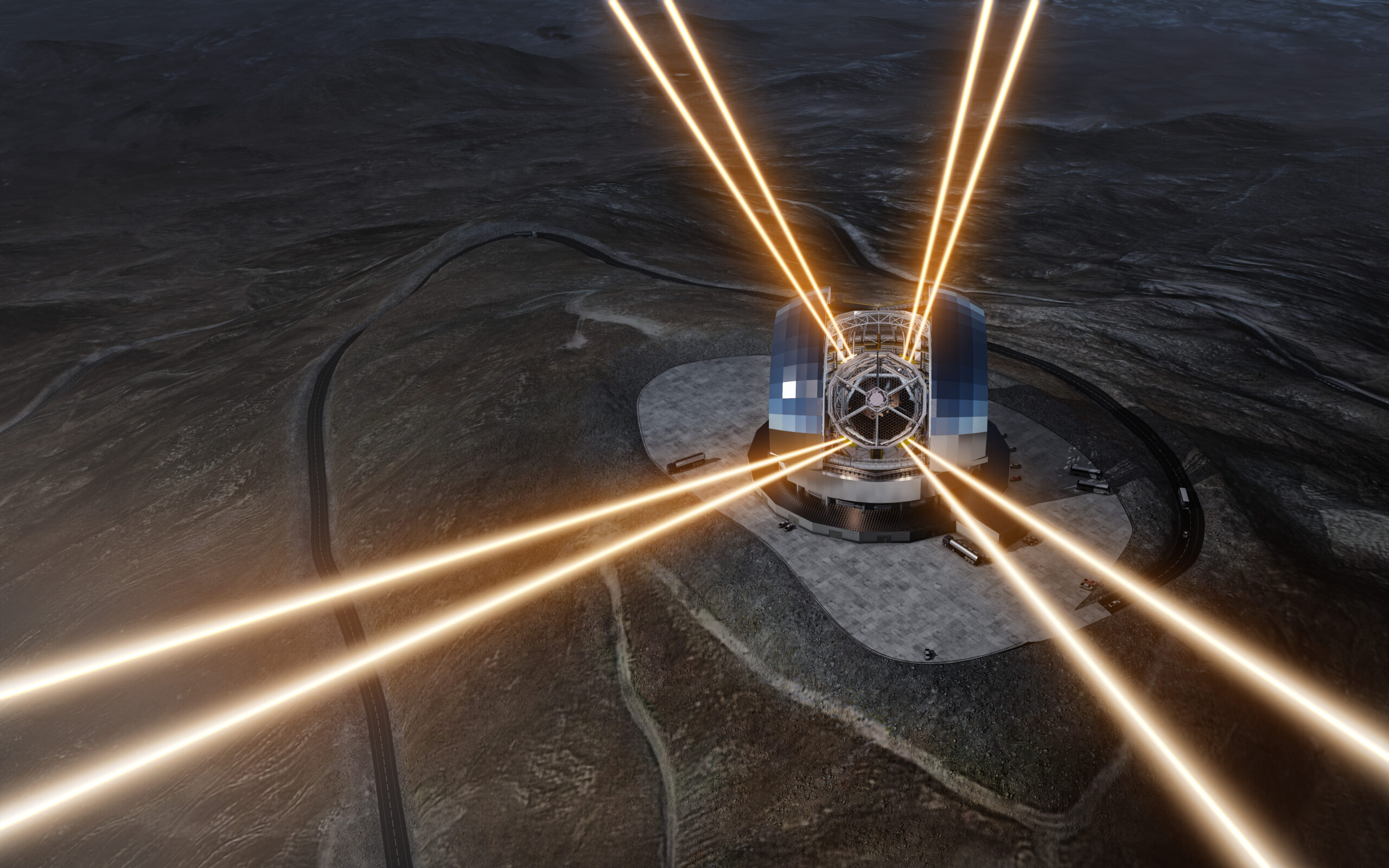
I have been involved in two instruments for the ELT. During my PhD, I worked on developing calibration methods for the Multiconjugate adaptive Optics Relay For ELT Observations (MORFEO). University of Galway is part of the consortium which is developing the test unit to ensure the instrument works as expected before it is delivered to the telescope. While participating in this project, I looked at using new technologies to simulate atmospheric turbulence, which the instrument would be expected to correct.
For my Postdoctoral research at Durham University, I am working as an Adaptive Optics Scientist for the High Angular Resolution Monolithic Optical and Near-infrared Integral Field Spectrograph (HARMONI). The role of an AO Scientist is interesting; we are somewhere between the astronomers and the engineers on the instrument, and our main job is to translate the requirements the astronomers place on the instrument, in terms of image quality, into mechanical requirements on the hardware. For example, if we need to achieve a certain sharpness on our images, what does that mean for how accurately we need to align our components?
How important do you think international collaboration is in the fields of astronomy and astrophysics? Why?
International collaboration is fundamental in astronomy and astrophysics. The scale, complexity and cost of modern astronomy projects go far beyond the capabilities of any one institution, or even nation. Scientifically, the universe is vast and complex, and understanding it requires a diverse range of expertise, perspectives, and technologies. Different research groups and institutes bring different strengths, whether that’s theoretical modelling, advanced computing, data analysis, or instrument design.
The universe is also seen through different wavelengths – radio, infrared, optical, x-ray, etc. Each instrument specialises in a specific wavelength, and the telescopes around the world work together to create a more complete picture of the cosmos than any single observatory could capture alone. Collaboration also allows for the cross checking of data, ensuring accuracy and reproducibility.
A good example of this is the first ever picture of a black hole in 2019. The image was captured by the Event Horizon Telescope; a network of eight radio telescopes located around the world which worked together to create a ‘planet-sized’ telescope. The data was then processed by independent teams, who later presented the results to each other to ensure accuracy and agreement amongst the groups before releasing such a monumental result to the public.
For instrumentation, the ELT is a fantastic example of international collaboration. The project is being funded and manufactured by 18 nations. The different instruments which will be installed on the telescope are themselves built out of sub-systems, being manufactured by different teams around Europe and beyond. These all need to work together, which requires an enormous amount of effort on behalf of everyone to ensure mechanical and software interfaces are compatible.
Ultimately, international cooperation strengthens the scientific process itself, turning competition into collaboration and accelerating the pace of discovery.
What advice would you give to aspiring researchers or those considering a career in your area of expertise?
In general, I always advise researchers to stay curious and find a research topic that they love. Passion is what drives research forward, and without it, nothing new would ever be discovered or invented.
But it’s not always easy to find your passion. It may take years working in a field you enjoy to find that one thing you want to focus on above all else, and that is perfectly normal. Research is a marathon, not a sprint, and not one we can do alone.
Enjoy the process, learn new skills, meet new people, foster new collaborations, and always be open to new ideas. In my experience, and specifically thinking about the world of astronomical instrumentation, there is such a massive variety of expertise needed to work on projects such as these. Our team has astronomers, optical scientists, software engineers, mechanical engineers, electronics engineers, construction workers, managers; the list goes on and on.
No matter who you are, or what you do, or where you want to go, there is always a place for you in research.


 Articles
 Podcasts
 Videos
 Publications
 New Horizons
 In Focus
 Innovate Together
 Global Impact
 SDG Champion Edition
 Creative Galway
 AI & Human Creativity
 Sustainability
 Equality
 Arts
Arts Business
 Law
Law Medicine
 MedTech
 Science
 Sport
Sport Sustainability
 Impact Toolkit & Case Studies
 Events