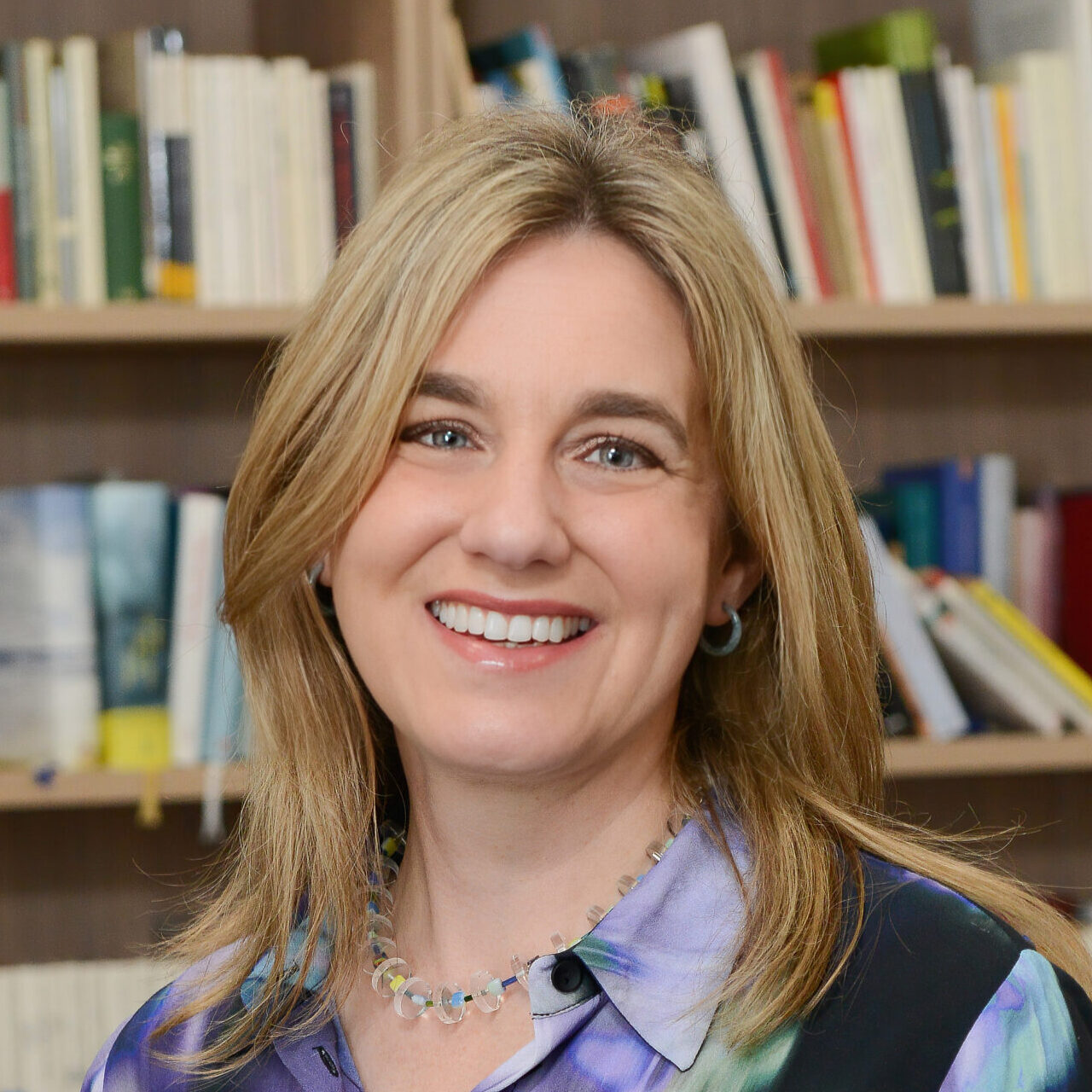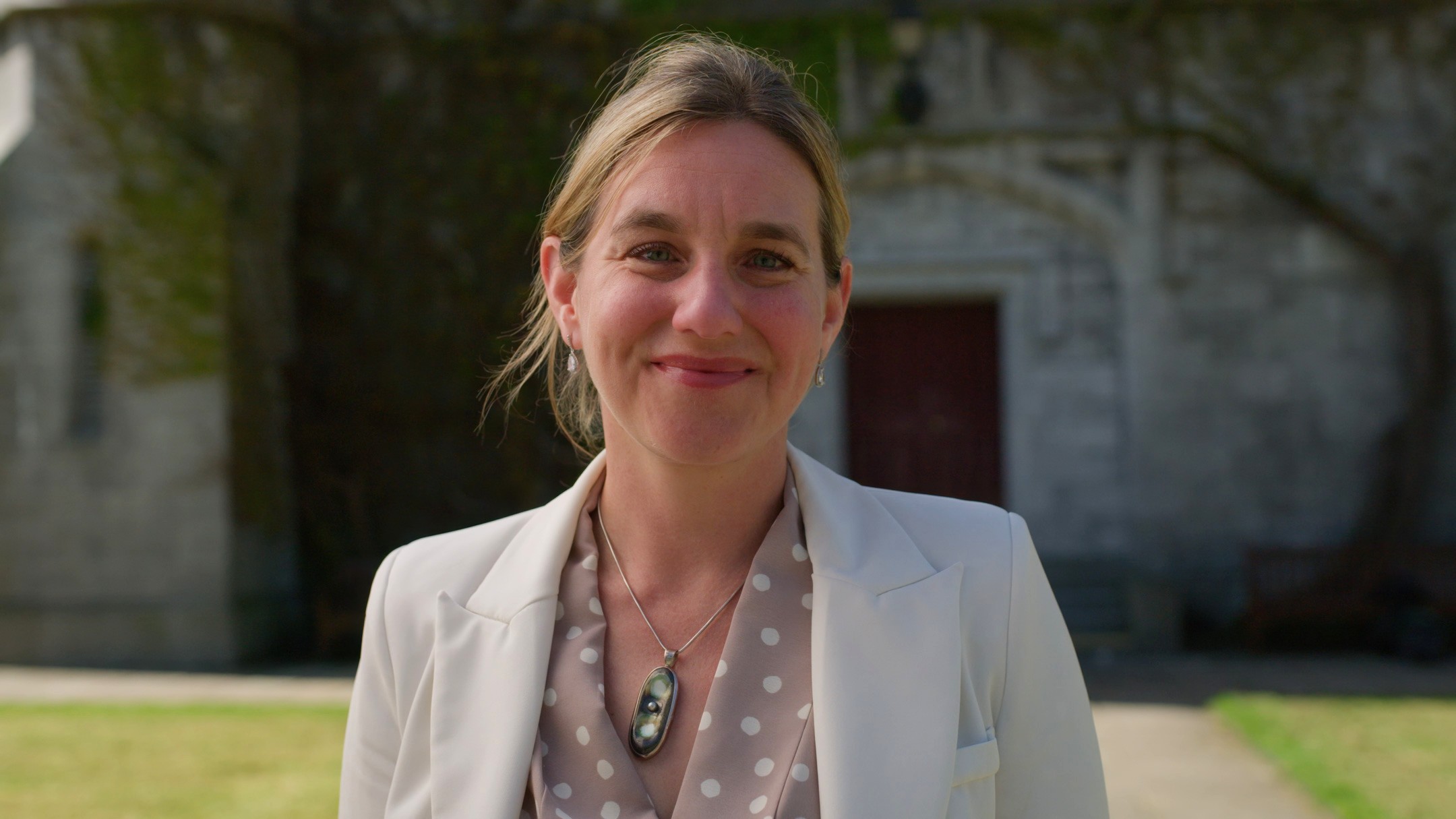

Prof Rebecca Braun connected with Cois Coiribe to discuss arts at University of Galway, and what the future holds. Read below to find out what the College of Arts, Social Sciences & Celtic Studies has to say about critical change in a new-age world.
What’s the point of arts?
The world has been rocked by expressions of social unrest, political inequality, and a digital revolution that too often rewards speed over critical thinking and empathy. The questions facing our graduates, and our institutions, are not abstract; they are existential. Yet, while our disciplines fiddle with footnotes, the planet continues to burn.
‘Was sind das für Zeiten, wo / Ein Gespräch über Bäume fast ein Verbrechen ist / Weil es ein Schweigen über so viele Untaten einschliesst!’, the German poet and dramatist Bertolt Brecht lamented almost a hundred years ago in his poem, ‘An die Nachgeborenen / To Those Born Later’: ‘What kinds of times are these, where / Talking about trees is almost a crime / Because it breeds silence on so many atrocities!’
What can and should we be talking about today? What future skills and historical knowledge will those born after us need? And who will listen and respond if all the poems about trees are generated by AI? These are the questions we are asking in the College of Arts, Social Sciences & Celtic Studies in the context of a wide-ranging review of our undergraduate curriculum. The aim is to produce a suite of new programmes over the next two years. These are fundamental questions about our fundamental purpose. Like arts, these questions are messy, and they are vital.
For over 175 years, arts have driven University of Galway’s sense of purpose. Historically it has done so in a somewhat undisciplined manner. But it worked.
By 1976, arts students made up 47% of Galway’s growing student population, triple the size of science (16%), the next closest area, and twice as large as the combined forces of science & engineering (23%). These figures broadly reflect the national picture at the time, although Galway’s mix is the most skewed towards arts and goes some way towards explaining the extraordinary fount of creative energy that would generate Druid, the International Arts Festival, Macnas, Baboró, and Branar, amongst other signature Galway initiatives, over the last fifty years.
There is a deeper layer to all this, however. An arts degree provides the bedrock for creativity in many areas of life well beyond the creative arts. When University of Galway was founded in 1845, it was (whether deliberately or not) following a model for organising a community around knowledge that has its roots in the medieval university system. The three founding faculties of Arts, Medicine, and Law at Galway directly echoed the medieval curriculum that would see students take a liberal arts style ‘studium generale’ consisting of seven foundational subjects (grammar, rhetoric, logic, arithmetic, geometry, music, astronomy) before potentially applying themselves to a professional pathway, or ‘studium particulare’, in Medicine, Law, or Theology. While these professional faculties could have existed as stand-alone bodies, and they often did, it was only when they were combined with the foundational knowledge of arts that a university was formed.
This historical model undergirds not just University of Galway but all the traditional Irish universities, and in it we must acknowledge this vital truth: basic knowledge is the university, and the university is, in an inherent, structural sense, the progenitor of both tradition and change. Just as in the past no good doctors or lawyers could emerge without critical comprehension of the most basic tools of their trade – linguistic and spatial relationships – so the contemporary arts degree guards against the kind of shamanism and fraud to which a poor use of AI can lead. The ability not just to know, but to know well and differently, is what universities offer their students, and what they themselves must stand for in a world out-of-joint.
Any new idea, principle, or object will need to be developed through some combination of language, numbers, and broader systems thinking that ran through the seven subjects of the studium generale. Broadly speaking, these core areas of knowledge still reside in the arts degree in the form of language awareness and textual literacy (e.g. English, History, Classics, Modern Languages), spatial / relational awareness (e.g. Geography, Archaeology, Drama, Music, Psychology, Mathematics), and socio-critical thinking (e.g. Sociology, Politics, Philosophy, Law, Economics).
We have become used to tracing familiar paths through all this. Study arts and become a teacher, a lawyer, a forensic psychologist, a theatre maker, a writer, an entrepreneur, an archaeologist, a politician…
To change Galway’s arts degrees is to realise the value of all these paths, and yet to be bold and declare it insufficient. To be bold not by looking for the next megatrend or otherwise trying to foretell the future, but by going back to our roots and seeing what else they might have to offer. For decades now, the joint honours degree, has been the answer. But what was the question?
And so we are going back to the start. Over the next year, a core group of some fifty academics and professional support staff are creating the time and space to ask again what we can know, how we can know it, and what kind of community might grow around this knowledge. They will do so in consultation, not just with their wider colleagues and students across all eight schools, but also with a broad selection of community partners and employers.
The purpose is practical – to design from scratch new programmes that can fully equip students and (in Brecht’s words) all ‘those who come later’ for the challenges of the mid twenty-first century. The method is simple: to draw again, but differently, on fundamental human knowledge, experience, and curiosity; to see how else one might trace a path through all this and out into the wider world, ready to meet it where it is at.
Fears may be widespread over the increasingly autonomous operating potential of large language models, the mental distress amongst younger generations, and the general planetary toll of humankind. An arts degree alone cannot reverse these developments. However, arts graduates are exactly the people who can bridge technical capability and humanistic judgement. To the technological advances facilitated by STEM disciplines, they bring a deep understanding of context, ranging from critical engagement with societal super-structures through to harnessing the empathy that resides in the judicious use of a phrase.
There is no question, then, about the point of arts, but a challenge to universities: how to best organise their curricula to ensure they are keeping to the fore the inimitable elements of learning that are so central to humankind’s existence. In the College of Arts, Social Sciences & Celtic Studies we are looking afresh at all programmes with this in mind. A programme that is free to draw on the full foundational knowledge held within a university can help students commit to critical change through the very act of changing itself.


 Articles
 Podcasts
 Videos
 Publications
 Change Makers
 New Horizons
 In Focus
 Innovate Together
 Global Impact
 SDG Champion Edition
 Creative Galway
 Sustainability
 Equality
 Arts
Arts Business
 Law
Law Medicine
 MedTech
 Science
 Sport
Sport Sustainability
 Impact Toolkit & Case Studies
 Events